
The short answer
Why there’s no application form here
A rental application is a legal document. What you may ask, what you may charge for it, how you use criminal history and what you tell a rejected applicant all vary by state and city — so a one-size form can be wrong exactly where you are. We don’t publish one. Your screening company will usually provide an application with its consent language built in, and your attorney can review it for your state.
What we can share is what a midterm (or medium-term) stay needs from an application that a yearly lease doesn’t, from running furnished mid-term rentals since 2019.
What to ask on a mid-term application
| Topic | What to ask | Why it matters for a mid-term stay |
|---|---|---|
| Every adult occupant | Name, email, phone; everyone 18+ applies | Everyone living there should apply and sign the lease |
| Dates | Move-in, move-out, and whether they might extend | Extensions are common — ask up front so you can plan the next stay |
| Reason for the stay | An assignment, a project, an insurance claim, a move | It tells you what to verify and how firm the end date is |
| Who pays | The tenant, their employer, a placement company or an insurer | The payer may not be the person living there — know before the lease |
| Employment and income | Employer or agency, role, income | Travelers’ pay often includes a housing stipend; judge the whole package |
| Rental history | Current address, past landlords | Many travelers keep a permanent home — ask about both |
| Pets and vehicles | Species, size, number; cars for parking | Furnished homes have more to protect; assistance animals aren’t pets |
| Identity | A government ID, checked against the applicant | Remote leasing makes identity fraud easier |
| Consent | Written authorization to run screening reports | Screening companies usually ask for it, and it documents your permissible purpose |
Travel nurses, companies and insurers: who you’re really screening
Travel nurses and other traveling workers
Confirm the assignment: the facility, the dates and the agency — many landlords ask for the first page of the contract. You can verify a nurse’s license for free on Nursys QuickConfirm. In our experience, travel nurses are some of the best mid-term tenants there are: most extend, and none has ever left us early in a first lease term. More in renting to travel nurses.
Corporate stays
When a company is paying, screen the company too: confirm it exists, who signs for it, and how it pays. We once housed a team from Italy building a manufacturing line in Arizona, paid by international wire under a contract with their foreign employer — after we’d verified it was a legitimate corporation. Whether to take a stay like that is your call; checking first isn’t optional.
Insurance (ALE) placements
A family displaced by a fire or flood lives in the home, but their insurer — often through a placement company — may pay the rent. Confirm the claim, who signs the lease, who pays the rent and the deposit, and how extensions are approved. More in renting to insurance placements.
A mid-term rental screening checklist
Start with written criteria — minimum income or who may pay on the tenant’s behalf, what rental history you need, how you use credit and background reports — and apply them the same way to every applicant. Then check:
- Every adult has applied, and the ID matches the person you’re talking to
- The reason for the stay is real: the assignment, the employer, the claim or the relocation
- The rent is covered — by the applicant’s income, a stipend, or a payer who has confirmed in writing
- Rental history: a landlord reference, and no unexplained gaps you haven’t asked about
- Credit and background reports from a screening company, run the same way for everyone, with written consent
- Records match the applicant — date of birth and address, not just a similar name
- Pets, occupants and dates match what the lease will say
- The deposit and first month’s rent arrive by a traceable payment before keys change hands
Fair housing: the rules that apply to every application
The federal Fair Housing Act applies to mid-term rentals the same as to yearly leases. It protects seven classes: race, color, national origin, religion, sex, familial status and disability. Many states and cities add more — source of income is a common one; New York, for example, makes it illegal to turn down an applicant because they pay with a housing voucher.
- Advertising counts. Listings can’t state a preference based on a protected class — “no kids” or “perfect for a single professional” are classic mistakes. Describe the home, not the tenant you imagine. This applies even to owners who are otherwise exempt from the Act.
- Families. Familial status is protected: you can’t turn down a family because they have children, outside housing that qualifies as senior housing.
- Disability and assistance animals. The Act requires reasonable accommodations. Its own regulations give the example of a blind applicant with a guide dog in a no-pets building: refusing is a violation.
- Criminal history. Federal guidance on criminal-records screening changed in 2025, and many states and cities have their own fair-chance rules. Have your attorney review how you use criminal history before you use it at all.
- Consistency is the protection. Written criteria applied the same way, with a record of why each decision was made.
Credit and background reports: the FCRA rules
Tenant screening reports are consumer reports under the federal Fair Credit Reporting Act, and the FTC spells out what landlords owe applicants:
- Permissible purpose. You certify to the screening company that you’ll use the report only for housing. Written consent from the applicant isn’t required by federal law for tenant screening, but screening companies ask for it and it’s the clean way to show your purpose.
- Adverse action notices. If anything in a report leads you to deny an application, require a co-signer, require a deposit others don’t pay or a larger one, or charge more rent, you must give a notice — even if the report was only a small factor. It names the screening company and its contact details, says the company didn’t make the decision, and explains the applicant’s right to a free copy within 60 days and to dispute errors. If you used a credit score, the score and its key factors go in too. Written notice is the safe way to do it.
- Disposal. When you’re done with a report, shred it or delete it securely — the FTC’s Disposal Rule covers landlords.
Application fees, holding deposits and security deposits
Application fees are set by state law in many places. California caps screening fees (adjusted each year for inflation) and limits them to your actual cost; New York bans application fees and caps background-check fees at $20 or the actual cost, whichever is less; Wisconsin caps a credit-report fee at $25. Arizona has no application-fee cap in its landlord-tenant act, but it requires the purpose of any nonrefundable fee or deposit to be stated in writing — anything not labeled nonrefundable is refundable.
Holding deposits — money to take a home off the market while you screen — should come with written terms: how much, whether it becomes part of the security deposit, and when it’s refunded if you decline.
Security deposits have state caps and return deadlines that apply to short leases too. Arizona caps security, including prepaid rent, at one and a half months’ rent and requires an itemized list of deductions within 14 business days; California allows one month’s rent for most landlords. We take a refundable deposit of at least $1,000 on every stay. For company- or insurer-paid stays, agree in writing who pays the deposit and who covers damage.
Red flags and scams
- Overpayment. A payment for more than you asked, followed by a request to refund the difference, is a classic fake-check scam. Wait for funds to truly clear — or refuse the overpayment.
- Won’t verify. An applicant who won’t show ID, won’t join a video call and can’t name the assignment or employer.
- A payer out of nowhere. A “company” or “insurer” you can’t confirm independently — look up its phone number yourself rather than calling the one in the email.
- Rush and pressure. Urgency to skip your normal steps. Your process protects you most when someone wants to skip it.
When to bring in a professional
- A screening company that operates as a consumer reporting agency — it handles the reports, the consent language and the information you need for adverse action notices.
- A landlord-tenant attorney to review your written criteria, your application and your notices for your state and city. Ours drafted our lease. The American Bar Association’s lawyer referral directory lists local referral services.
- Your state’s rules on deposits and fees — your attorney or state housing agency will know the current limits.
Applications and screening in Nexxus
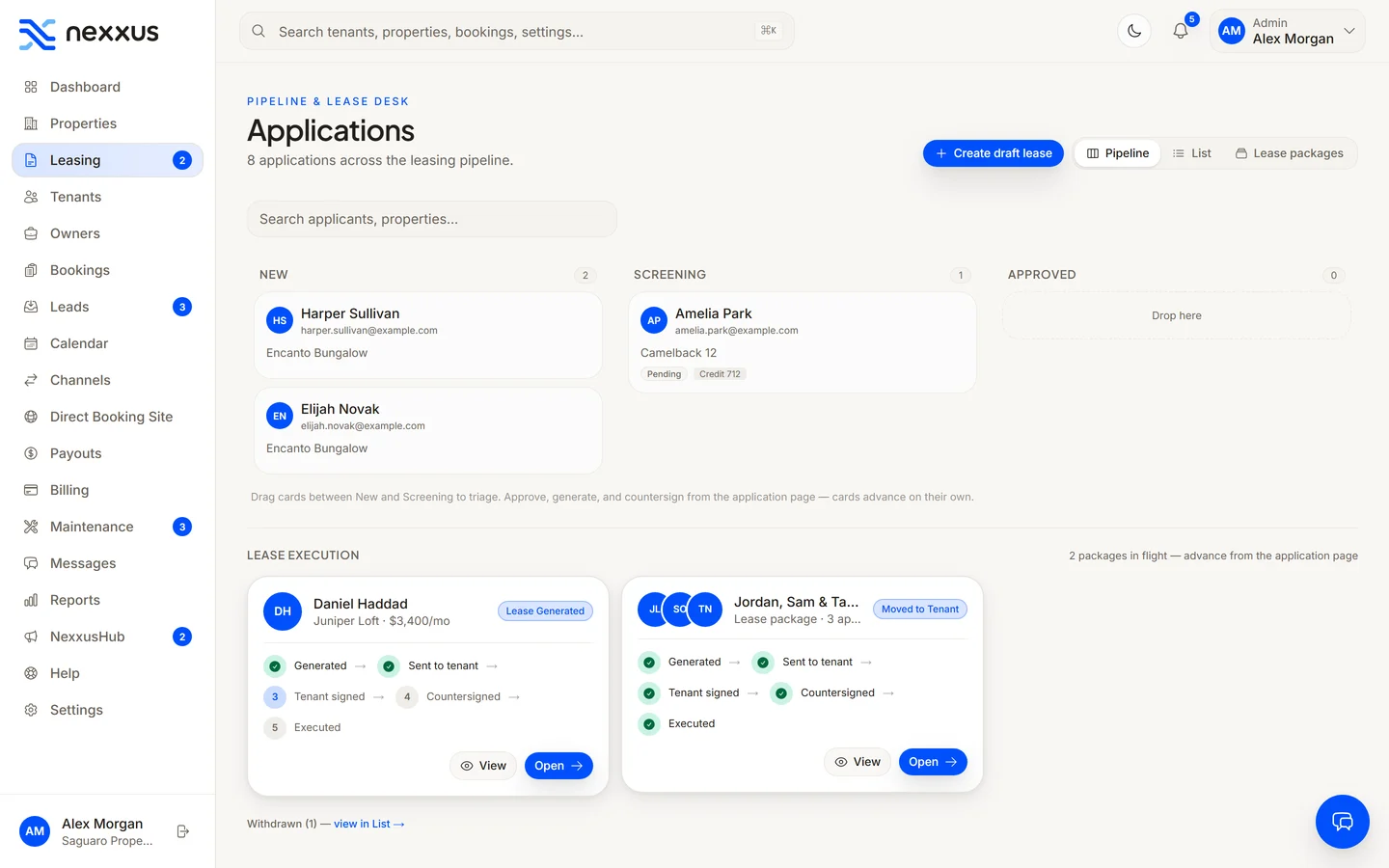
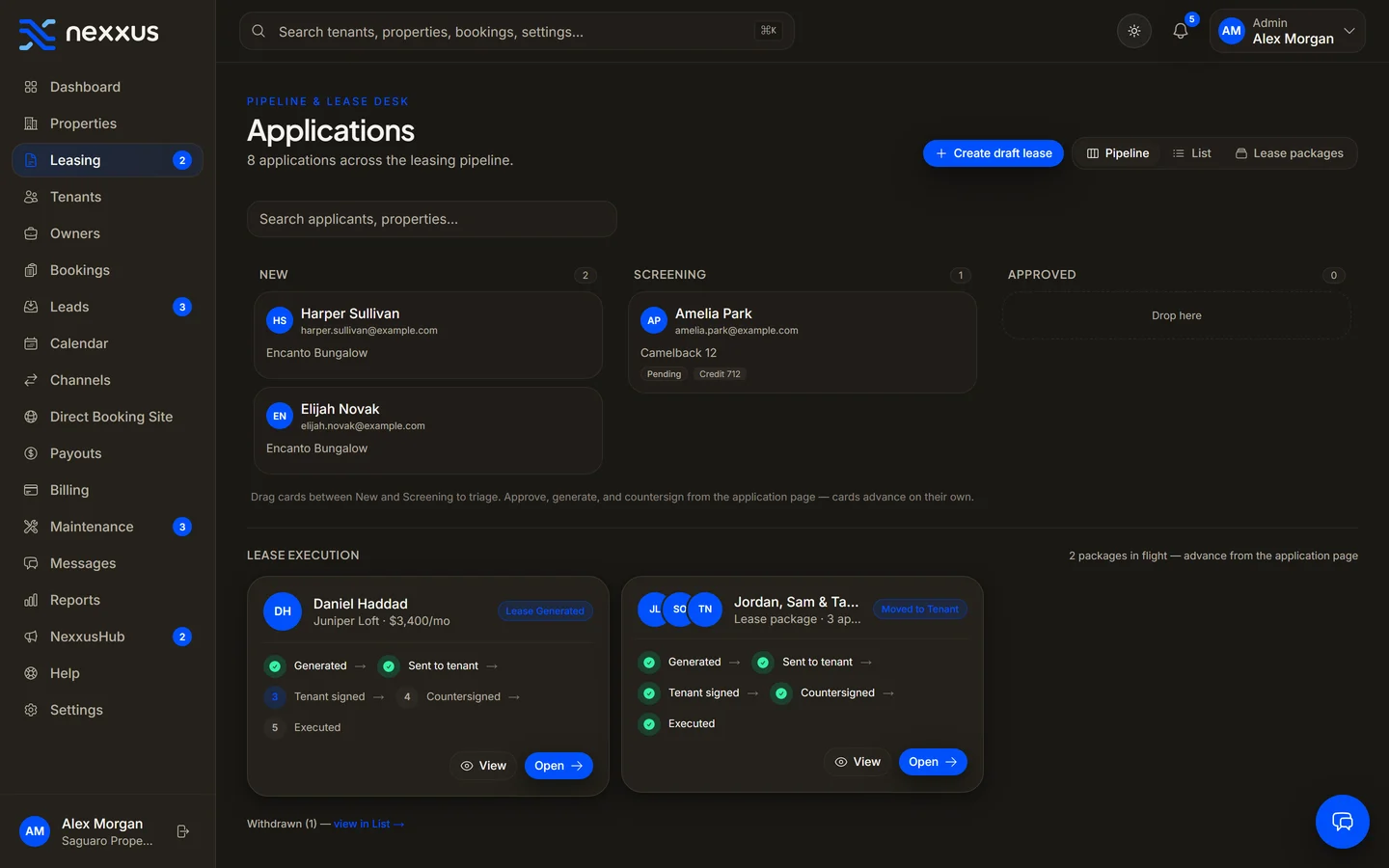
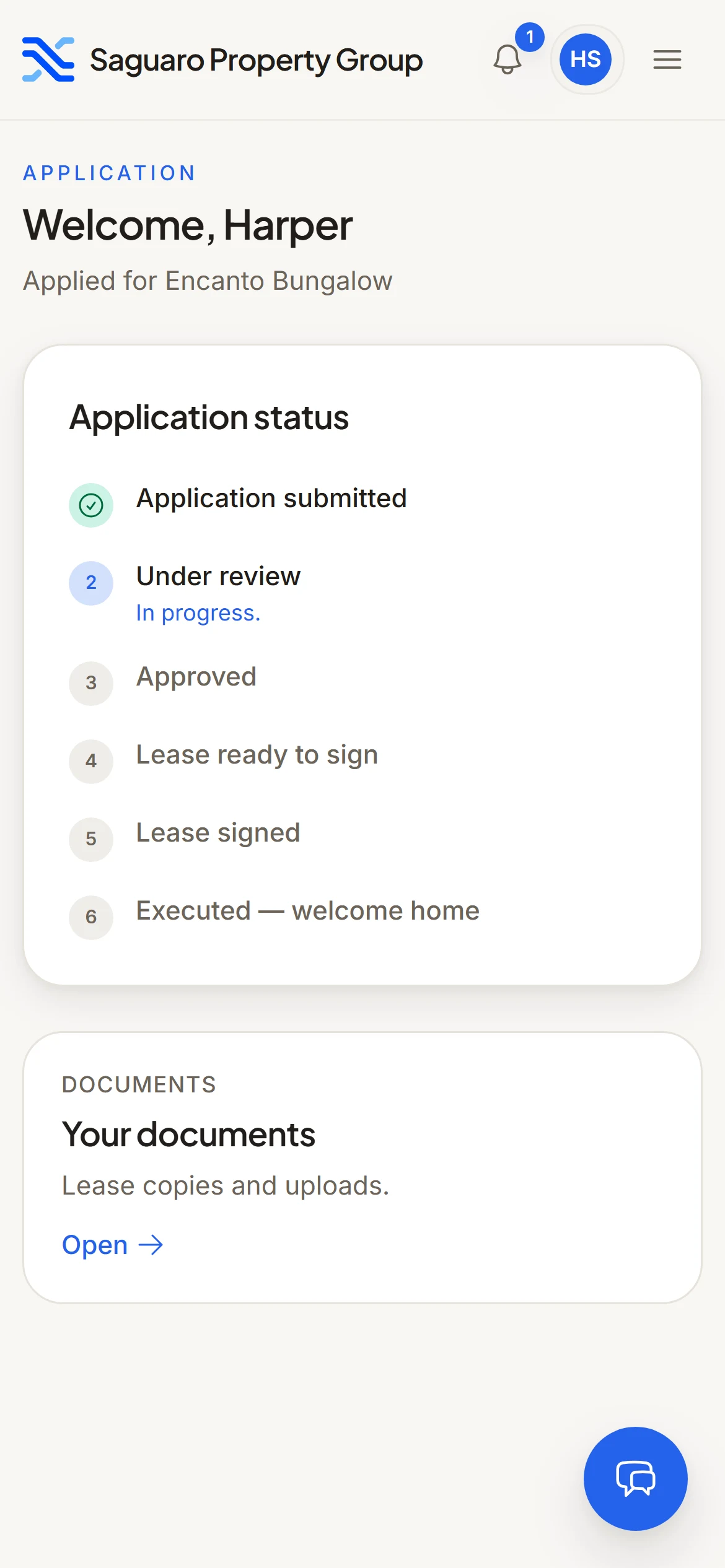
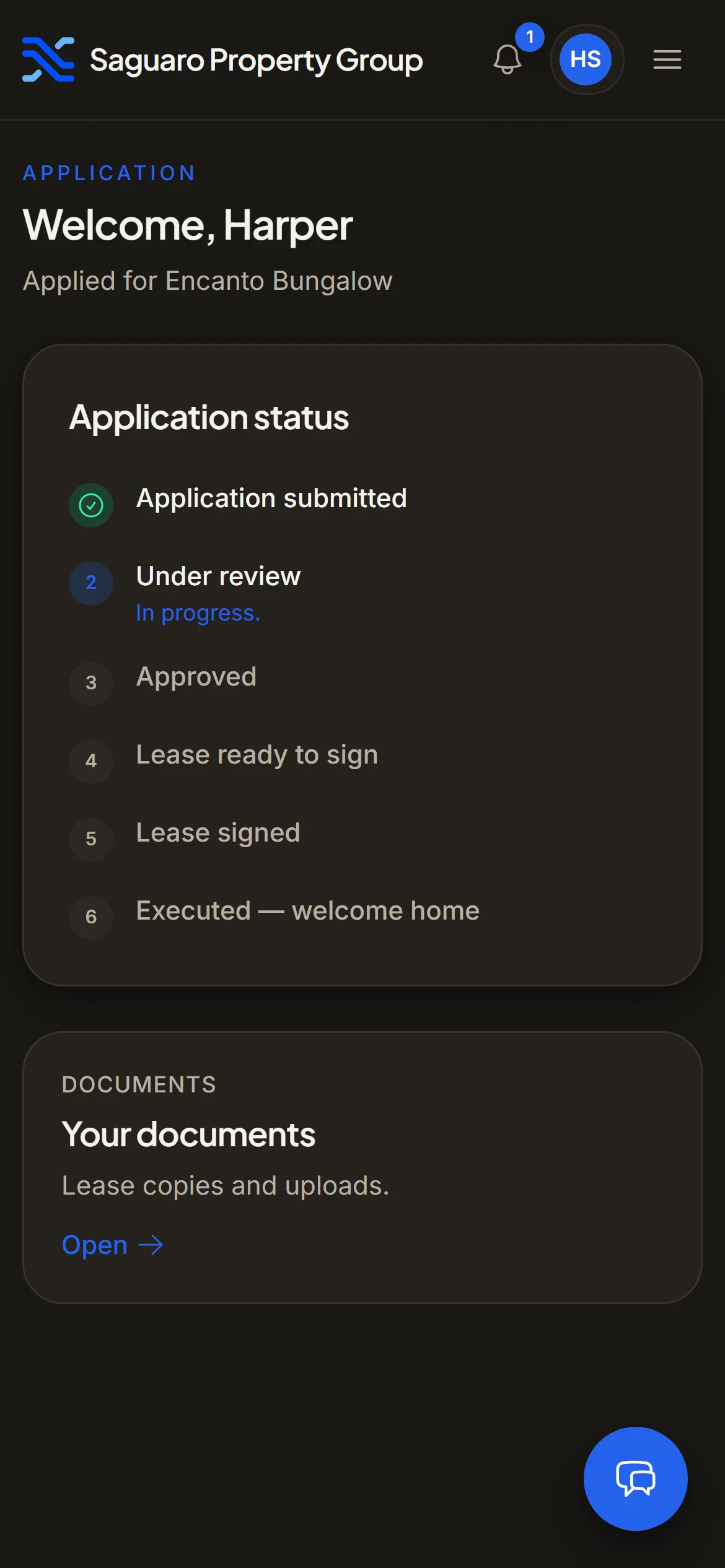
Applicants apply online on your own booking site: their details, the dates and lease term they want, employment and income, pets, and ID or pay-stub uploads. Submitting creates their applicant portal account, where they follow the decision and later sign the lease.
In Nexxus, every application sits on one pipeline — new, screening, approved — next to the leases it becomes. Approve it, mark that you need more information, or decline with a reason the applicant sees in their portal; then generate the lease from the approved application. Credit and background reports run from inside the application. Once the lease is signed, the security deposit and the rent for the whole stay are on the tenant’s ledger, and they pay both in the resident portal.
See how applications fit the rest of a mid-term stay in mid-term rental software, or open the live demo set up for mid-term — no sign-up. What goes in the lease itself is in mid-term lease agreements, and screening on Furnished Finder is covered in Furnished Finder for landlords.
Applications and screening FAQ
What should a mid-term rental application include?
Everything a yearly-lease application asks — name and contact details for every adult, current address and rental history, employment and income, pets, and consent to run screening reports — plus what a furnished monthly stay needs: the exact dates, whether they might extend, why they’re in town (an assignment, a project, an insurance claim, a move) and who is paying the rent if it isn’t them.
How do you screen a mid-term rental tenant?
Write your criteria down first and apply them to every applicant. Then verify identity, confirm the reason for the stay (the nurse’s assignment, the employee’s project, the insurer or placement company behind a displaced family), confirm they or their payer can cover the rent, check rental history, and run the same credit and background checks for everyone — through a screening company, with the applicant’s written consent.
Should I run a credit check for a three-month stay?
Many landlords do, and a three-month stay in a furnished home is a lease like any other. Whatever you choose, do it for every applicant in the same situation. If a report leads you to deny someone, ask for a co-signer or charge a bigger deposit, federal law requires an adverse action notice.
Can I charge an application fee for a mid-term rental?
It depends on your state. Some cap the fee or tie it to your actual screening cost — California, New York and Wisconsin do — and Arizona requires the purpose of any nonrefundable fee to be stated in writing. Check your state and city before you charge one.
How much should a mid-term rental security deposit be?
Whatever you set has to fit your state’s cap, if it has one: Arizona caps security at one and a half months’ rent, and California allows one month for most landlords. We take a refundable deposit of at least $1,000 on every stay, because a furnished home has more to damage.
Do I have to tell an applicant why I turned them down?
If anything in a credit or background report played a part — even a small one — the Fair Credit Reporting Act requires an adverse action notice naming the screening company and explaining the applicant’s rights. Some states and cities add their own notice rules. Either way, keep a written record of the reason.
Can I say no to pets in a mid-term rental?
Yes, you can have a no-pets rule. But an assistance animal for a person with a disability isn’t a pet under the Fair Housing Act: refusing a reasonable accommodation — like allowing a guide dog in a no-pets home — is illegal. Ask your attorney how to handle requests and documentation in your state.
Sources
Checked September 26, 2026. Screening law changes often — confirm the current rules with your attorney. We cite the statutes and regulations themselves because several federal guidance documents were withdrawn in 2025.
- HUD: housing discrimination under the Fair Housing Act
- 42 U.S.C. 3604 (discrimination, including advertising) and 42 U.S.C. 3603 (exemptions; the advertising rule still applies)
- 24 CFR 100.204 (reasonable accommodations)
- Federal Register, April 6, 2026 (HUD’s notice of withdrawn fair-housing guidance documents)
- FTC: using consumer reports — what landlords need to know and the Disposal Rule
- 15 U.S.C. 1681b (permissible purposes of consumer reports)
- Application fees: California Civil Code 1950.6, New York Real Property Law 238-a, Wisconsin Statutes 704.085
- Deposits: Arizona Revised Statutes 33-1321, California Civil Code 1950.5
- New York Attorney General: source-of-income discrimination
- FTC: fake check scams
- NCSBN: license verification (Nursys QuickConfirm)
- American Bar Association: lawyer referral directory