
The short answer
A mid-term rental — you’ll also see midterm or medium-term rental — is a furnished home rented for one to twelve months, usually 30 nights or more. The tenants are travel nurses, project crews, relocating families and households displaced by insurance claims, and they don’t all search in the same place. That’s why no single site is enough, and why the sites themselves are only half the job.
Every channel at a glance
| Topic | What it costs you | Who you reach | What you get |
|---|---|---|---|
| Your own website | Your site and domain; no booking commission | People who search for you, repeat tenants, referrals, recruiters | Inquiries and applications you own |
| Zillow (+ Trulia, HotPads) | Free to list directly; optional paid boost | People searching for a furnished place to live | Leads |
| Airbnb (28+ nights) | A service fee on every booking | Travelers already on Airbnb | Booked, paid stays |
| Furnished Finder | $199 a year per listing; no commission | Travel nurses and other traveling professionals | Leads |
| Corporate Housing by Owner | $399–$995 a year by plan | Corporate and traveling tenants | Leads |
| Placement companies | Usually free to register | Insurance-displaced families, relocating employees | Placements when a need comes up |
| Facebook, Craigslist | Free (Craigslist charges $5 in a few cities) | Local renters and travel-nurse groups | Leads, with more screening to do |
Two kinds of channel are hiding in that table. Booking sites like Airbnb take the booking and the payment, and charge a fee on every stay. Lead sites like Furnished Finder and Zillow charge a flat fee or nothing, and hand you a lead — the lease, the deposit and the rent are yours to handle. Mid-term operators need both, which is why the system behind the listings matters so much.
1. Your own website
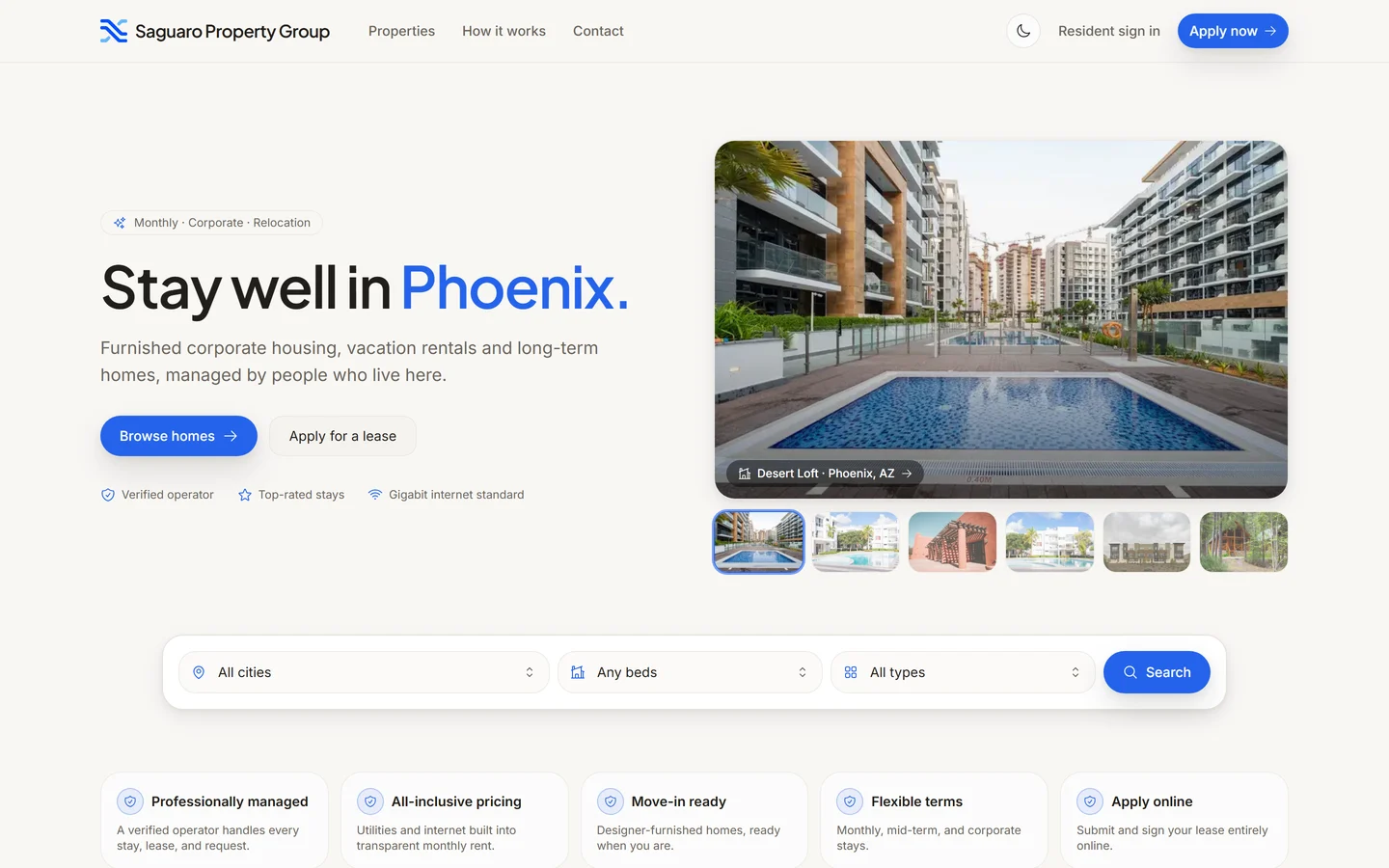
Our own site is our biggest source of mid-term tenants, and it isn’t close — a steady stream of inquiry and application forms from people who found our homes directly. That surprises operators who think of a website as a brochure, but it makes sense for mid-term stays:
- Mid-term tenants search for a place to live, not a vacation. They compare homes, read what’s included and want to apply — a site that shows the monthly price and takes an application converts them.
- Every lead is yours. No commission, no platform deciding who sees your home, and no message filter between you and a tenant who wants to extend.
- It compounds. Past tenants, their colleagues, recruiters and relocation coordinators come back to the site they already know.
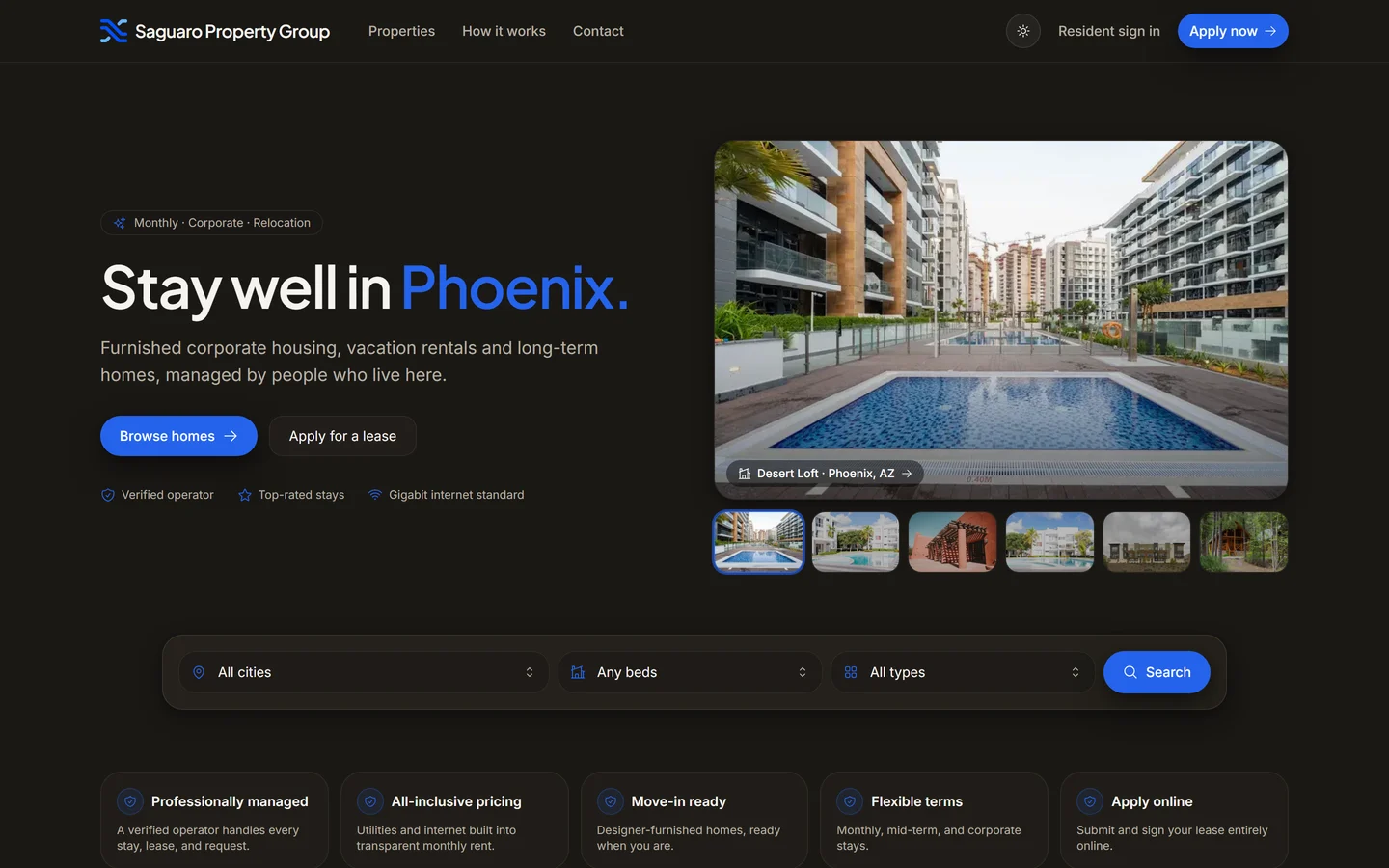
The site has to do more than look good: show real availability, the monthly rent and what’s included (utilities, Wi-Fi, parking), and take an application online. A Nexxus site does that on your own brand and domain, and every inquiry and application lands in the same place as your leases.
2. Zillow and the long-term listing sites
Zillow is our second-biggest source. Plenty of mid-term tenants — relocating families especially — search the same sites as long-term renters and filter for furnished homes. As of September 2026, listing directly on Zillow Rental Manager is free, with an optional paid boost, and a Zillow listing also appears on Trulia and HotPads. Renters pay Zillow’s application fee, not you.
Two cautions. Zillow’s listing rules exclude vacation and hotel-style short-term rentals, so list the home as a furnished rental with a lease and a minimum term — which is what a mid-term rental is. And be clear about the term in the description: long-term renters will inquire about a furnished monthly home, so say what lengths you take.
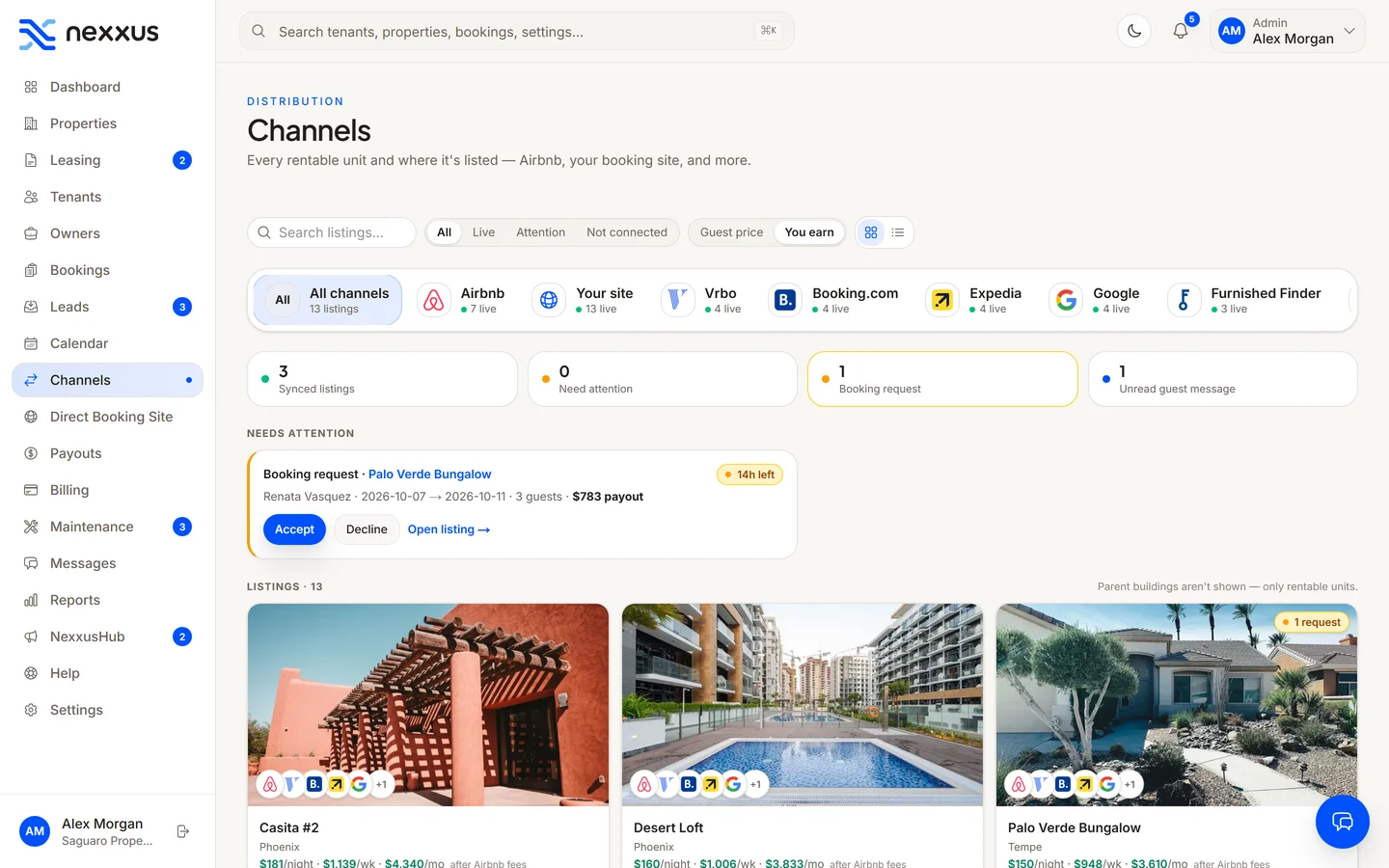
Our listings also syndicate to the other big long-term sites — our fourth-largest source. Nexxus publishes one listing to Zillow, Trulia, HotPads, Apartments.com, Realtor.com, Zumper and more, with every lead coming back to one inbox.
3. Airbnb monthly stays
Airbnb is our third source. You don’t need a separate listing: Airbnb treats any stay of 28 nights or more as a monthly stay, and you set a monthly discount on your nightly price. We set ours at about 15–20% off the nightly rate. How Airbnb handles long stays, as of September 2026:
- Payments are monthly. The guest pays the first month when they book and later months in advance; you’re paid monthly too.
- Long-term cancellation policies apply to stays of 28 nights or more — Firm or Strict — and they protect roughly the next 30 days of rent once the stay is close or underway.
- Tenancy can start before the checkout date. Airbnb’s own guidance says a guest may establish tenant rights after a month, and that in some states a tenancy can be created after 30 consecutive days. That’s why many hosts sign a separate lease for long stays — see what a mid-term lease should cover. This is general information, not legal advice.
Airbnb is also the channel where short and mid-term stays meet: a monthly guest and a two-night guest can land on the same home. Nexxus syncs Airbnb listings, reservations and calendars, so both sit on the same calendar as your leases.
Furnished Finder: fees, and is it worth it?
Furnished Finder is the best-known site built for mid-term stays, and it grew up serving travel nurses. As of September 2026, its help center lists $199 a year per listing, with discounted add-on units, and it takes no commission on bookings. Its tenant screening is usually paid for by the traveler, and it offers optional lease and rent-payment tools.
Is it worth it? If there are hospitals within a reasonable drive of your home, almost certainly — the fee is small next to one month of mid-term rent. Far from healthcare demand, it’s a weaker bet. Either way, treat it as a lead source, not a booking engine: it hands you inquiries, and the screening, lease, deposit and rent are yours to run. Nexxus lists homes on Furnished Finder and brings its leads and applications into the same place as every other channel. For more on travel-nurse tenants, see renting to travel nurses.
Corporate and insurance placement companies
Some of the steadiest mid-term demand never touches a listing site. When a fire or flood displaces a family, their insurer often pays a temporary-housing company to find them a furnished home nearby. When a company moves an employee or sends a project team, a corporate-housing or relocation company does the same. These companies keep lists of homes they can call.
- Getting on the list is usually free. Insurance-housing companies such as ALE Solutions and CRS Temporary Housing have property sign-ups for owners; some sell an optional “preferred” tier that puts you higher in their searches.
- Corporate-housing companies vet suppliers. National Corporate Housing, for example, asks suppliers for a W-9, proof of insurance, credit and reference checks and a signed service agreement, and suppliers respond to client requests.
- Be patient and current. Placements come when a claim or a project lands near your home — some owners wait months for the first call. Keep your availability up to date so you’re the home they can actually place.
How these stays work — who pays, how long they last and what placement companies ask for — is in renting to insurance companies and corporate housing software.
Other sites worth knowing
- Corporate Housing by Owner (CHBO) — an annual listing, $399 to $995 a year depending on the plan as of September 2026.
- Travel Nurse Housing — an annual listing aimed at healthcare travelers, with no booking commission.
- Vrbo — like Airbnb, it offers a monthly discount for stays of 28 nights or more, and charges per booking.
- Facebook Marketplace and groups — free, and travel-nurse housing groups are active in many cities. Expect more screening work.
- Craigslist — free in most places ($5 for apartment listings in a few large cities). Screen carefully.
- Not listing sites: Blueground and Landing furnish and run apartments themselves — you partner with or rent to them rather than list with them. And Kopa, still on many “best MTR sites” lists, has shut down.
Listing everywhere without double bookings
More channels mean more tenants — and more ways to promise the same home twice. Booking sites like Airbnb and Vrbo can sync calendars with each other, but lead sites don’t hold dates at all: a Furnished Finder inquiry or a Zillow lead becomes a stay only when you sign a lease. Before we built Nexxus, our calendars weren’t unified, and that is exactly how double bookings happened.
Our best leads come from our own site, then Zillow, then Airbnb. The listing sites were never the hard part — keeping every lease, booking and calendar in one place was. That’s the part we built Nexxus to do.
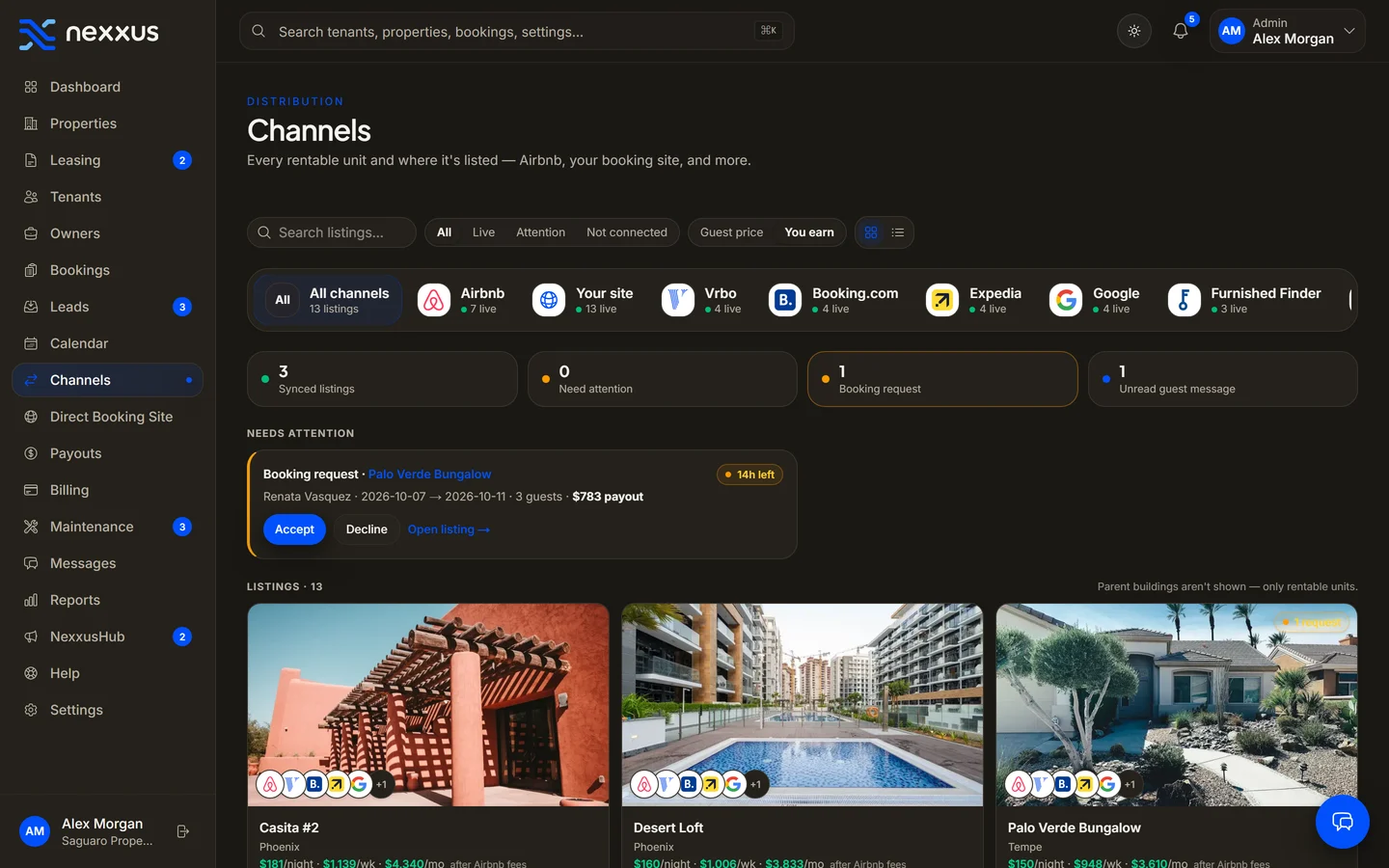
That’s the idea behind Nexxus: it isn’t another place to list. It’s the system behind the listing sites — one calendar with every Airbnb booking, direct booking and lease on it, one inbox for every lead, and one ledger for the rent that follows. See how that works in mid-term rental software, or open the live demo set up for mid-term — no sign-up.
Where to list mid-term rentals: FAQ
What is the best site to list a mid-term rental?
There isn’t one — mid-term tenants come through several doors. For us the biggest source by far is our own website, then Zillow, then Airbnb with monthly stays turned on, then the long-term listing sites our listings syndicate to. Operators near hospitals often add Furnished Finder, and corporate and insurance placement companies are worth registering with. List in a few places and keep every calendar in one system.
How much does Furnished Finder cost landlords?
As of September 2026, Furnished Finder lists an annual fee of $199 per listing, with discounted add-on units, and takes no commission on bookings. Its tenant screening is usually paid for by the traveler. Check Furnished Finder’s own pricing page before you sign up — its prices have changed over the years.
Is Furnished Finder worth it for landlords?
Usually, if your home is within a reasonable drive of hospitals that hire travel nurses: a flat yearly fee is small next to one month of mid-term rent. It is less useful far from healthcare demand. Remember it produces leads, not bookings — you still answer inquiries, screen, sign a lease and collect rent yourself.
Can you list a mid-term rental on Airbnb?
Yes. Airbnb treats stays of 28 nights or more as monthly stays: you can set a monthly discount, long stays are charged month by month, and special long-term cancellation policies apply. Airbnb also warns that a guest can gain tenant rights after about a month in some places, so many hosts use a written lease for long stays. Check your state’s rules.
Should I charge the same rent on Airbnb and Furnished Finder?
Not necessarily. Airbnb adds service fees and prices by the night with a monthly discount, while Furnished Finder tenants see a monthly rent with no booking fee. Many operators set each channel so the amount they keep is about the same. On Airbnb, we set monthly discounts at around 15–20% off the nightly rate.
How do I get corporate or insurance housing placements?
Register your home with the temporary-housing and corporate-housing companies that place people for insurers and employers — most have a free property or supplier sign-up — and keep your availability current. Expect paperwork (a W-9, proof of insurance, sometimes a service agreement) and be patient: placements come when a claim or a project lands near your home.
How do I avoid double bookings when I list on several sites?
Keep one calendar as the source of truth and block dates there first. Airbnb and other booking sites can sync calendars, but lead sites like Furnished Finder, Zillow and Facebook don’t hold dates at all — a signed lease does. Nexxus puts Airbnb bookings, direct bookings and every lease on one calendar, so a unit is never promised twice.
Sources
Fees and rules were checked on each site on September 25, 2026. They change — confirm the current terms before you sign up.
- Airbnb Help Center: weekly and monthly discounts, long-term cancellation policies, when you’ll get your payout, service fees, responsible hosting in the United States
- Furnished Finder (listing fee and screening, per its help center)
- Zillow Rental Manager and the Zillow Rentals Network listing policy
- Corporate Housing by Owner: pricing
- Craigslist: posting fees
- ALE Solutions: register housing, CRS Temporary Housing: landlords, National Corporate Housing: supplier partners