
The short answer
Why direct matters more for mid-term
Our own site brings in about a quarter of our stays. Since we started investing in search, it brings in five to seven inquiry forms a week. Not every one becomes a stay — but none of them costs a commission, and it’s the one channel that keeps growing. A few reasons it matters more for a midterm business than for nightly rentals:
- Mid-term tenants shop like renters. A weekend guest books in a minute. Someone moving in for three months compares homes, reads what’s included, asks about parking and pets, and wants to apply. A site built for that converts them.
- The fee is on months, not nights. A commission on a three-month stay is a commission on three months of rent.
- Relationships come back. Tenants who extend, their colleagues, travel-nurse recruiters, relocation coordinators and insurance adjusters return to a site they already know.
- Your process, your lease. On a direct stay you decide how people apply, how they’re screened and what they sign. On Airbnb, those rules are Airbnb’s — see Airbnb monthly stays.
It isn’t either-or. About half of our stays still come through Airbnb and a quarter from Zillow and the other listing sites. The direct site is where the people who already know you — or found you in search — can go straight to applying.
What the site has to show
- Real availability — the next open date for each home, updated from the same calendar as your other channels, so nobody applies for a home that’s taken.
- The monthly rent and every required fee — deposit, cleaning, admin and application fees, up front. Ours: a $1,000 refundable deposit, about $300 cleaning, a $150 admin fee and $65 per adult to apply.
- What’s included — utilities, Wi-Fi, parking, laundry, the furnishings and a stocked kitchen.
- The terms — minimum stay, how extensions work and the notice to vacate (ours is 30 days).
- Real photos and the location — beds and baths, a workspace, and the commute to the hospitals and job sites nearby.
- The pet policy — and that assistance animals aren’t pets.
- How to apply and what happens next — the application, screening, the lease, then the deposit.
- Who you are — a business name, a phone number and an email. Rental scams copy real listings; a real business is part of what you’re selling.
Inquiries first, then applications
Most mid-term leads start with a question, not an application. Keep the inquiry form short — dates, who’s staying, why they’re in town (work, insurance, relocation), pets — and answer the same day: in our market, every good lead hears from plenty of other hosts.
When they’re ready, send them to the application. Every adult who will live there applies; we screen every direct applicant, and we can’t screen Airbnb guests the same way — which is one more reason direct stays are worth growing. Application fees, deposits and what you may ask are set by state law, so check yours: our applications and screening guide covers what to ask, what to check and the rules.
What you keep: direct vs Airbnb
| Topic | What it charges | On a $3,000 month |
|---|---|---|
| Airbnb | A service fee on each stay; most hosts now pay 15.5% | $465 |
| Furnished Finder | $199 a year to list, no commission or booking fees | No per-stay fee |
| Your own site | No commission; you pay for the site and payment processing | Stripe’s standard US pricing: $87.30 by card (2.9% + 30¢), $5 by bank debit (0.8%, capped at $5) |
Airbnb earns its fee — it brings the traffic, handles payment and backs stays with AirCover — and it’s where about half of our stays come from. The point isn’t to leave Airbnb; it’s that every stay you can take direct keeps the fee in your pocket. Set your prices so what you keep is about the same on every channel. Every channel, with what it costs, is in where to list mid-term rentals.
Getting people to your site
- A page for each home, and for each kind of tenant. Travel-nurse housing near a hospital, corporate housing in your city, insurance housing — pages that match what people type are the ones search engines send inquiries to.
- Put the link where your tenants’ gatekeepers look. Recruiters, relocation coordinators, adjusters and HR teams will bookmark a site that answers their questions.
- Make it easy to come back. Tenants who extend or return — and their colleagues — should find your site in one search.
- Know what Google needs. Google’s free booking links send travelers straight to your own site with no referral fee, but its vacation-rental listings are for registered property management businesses with a direct booking website, and Google recommends that smaller managers connect through an approved connectivity provider.
- Respect each platform’s rules. Airbnb’s off-platform policy doesn’t let hosts move bookings off Airbnb — extensions included — or use guests’ contact details for marketing. Grow direct with the people who find you directly.
Rules your site has to follow
- Fair housing applies to your ads. The Fair Housing Act makes it unlawful to publish an ad for a dwelling that indicates a preference or limitation based on race, color, religion, sex, disability, familial status or national origin — and the owner exemptions elsewhere in the Act don’t cover advertising. Describe the home, not the tenant you want.
- Show the whole price. Since May 12, 2025, the FTC’s rule on unfair or deceptive fees has required short-term lodging — including vacation rentals — to show the total price, mandatory fees included, more prominently than any other price. The FTC sets no length of stay and excludes ongoing landlord-tenant rentals, so whether it reaches a furnished monthly stay depends on the facts. The safe habit: show the all-in monthly price.
- Application fees and deposits are regulated. Several states cap application fees and security deposits — see applications and screening.
This is general information, not legal advice.
A direct booking site in Nexxus
A Nexxus site runs on your brand — your logo, colors and fonts, at a subdomain or your own domain. Visitors search your homes by city, beds and type, see photos, the monthly rent, the deposit and cleaning fee, and an availability calendar that comes from the same calendar as your Airbnb stays and leases.
Every inquiry lands in your leads inbox and your email, with where it came from. Applications take five steps — the stay, employment and income, pets, documents — and create the applicant’s own portal, then land in your applications pipeline, where you move them from new to screening to approved and send the lease to e-sign. For nightly stays you can also let guests book and pay by card on your site, or approve each request first.
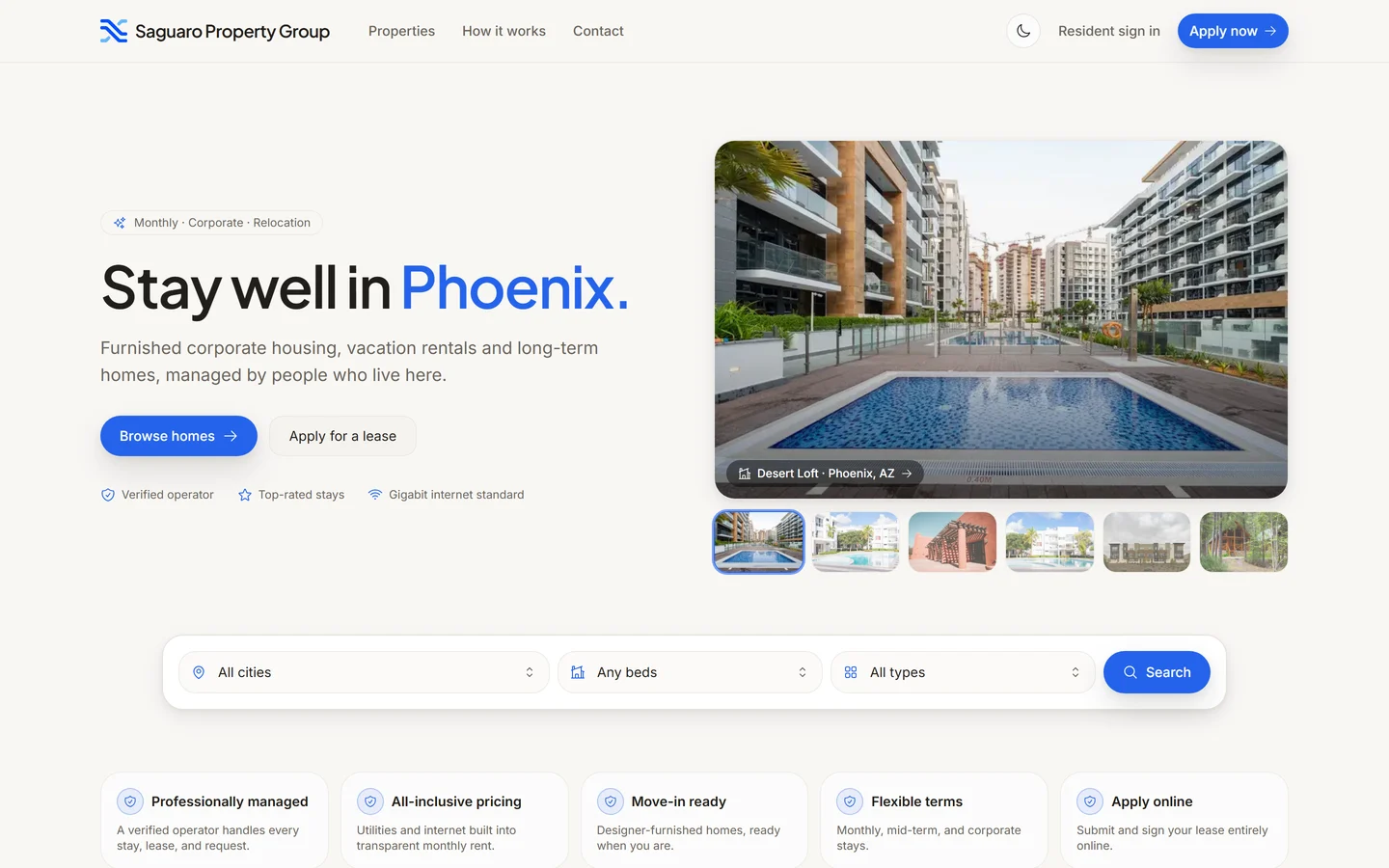
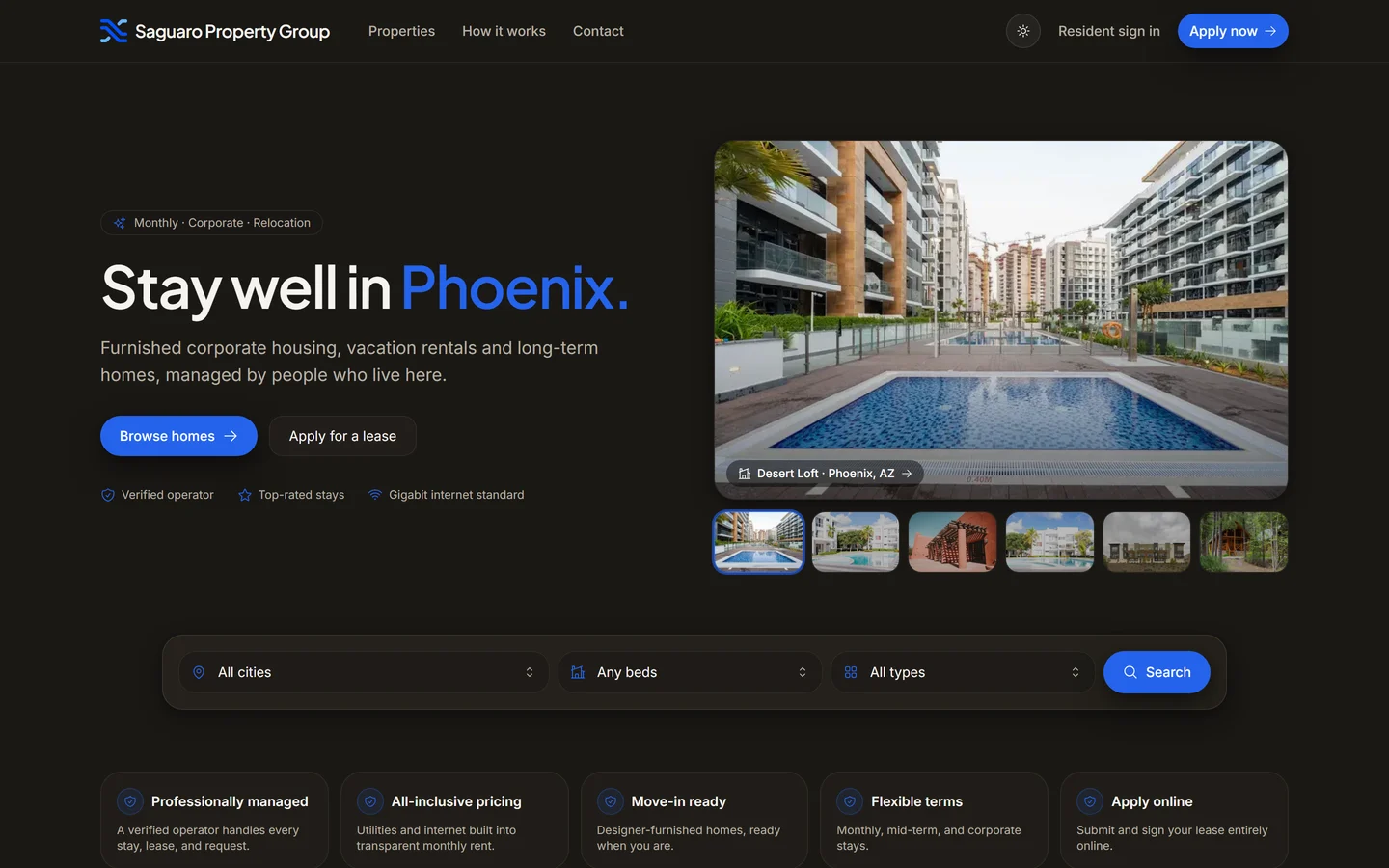
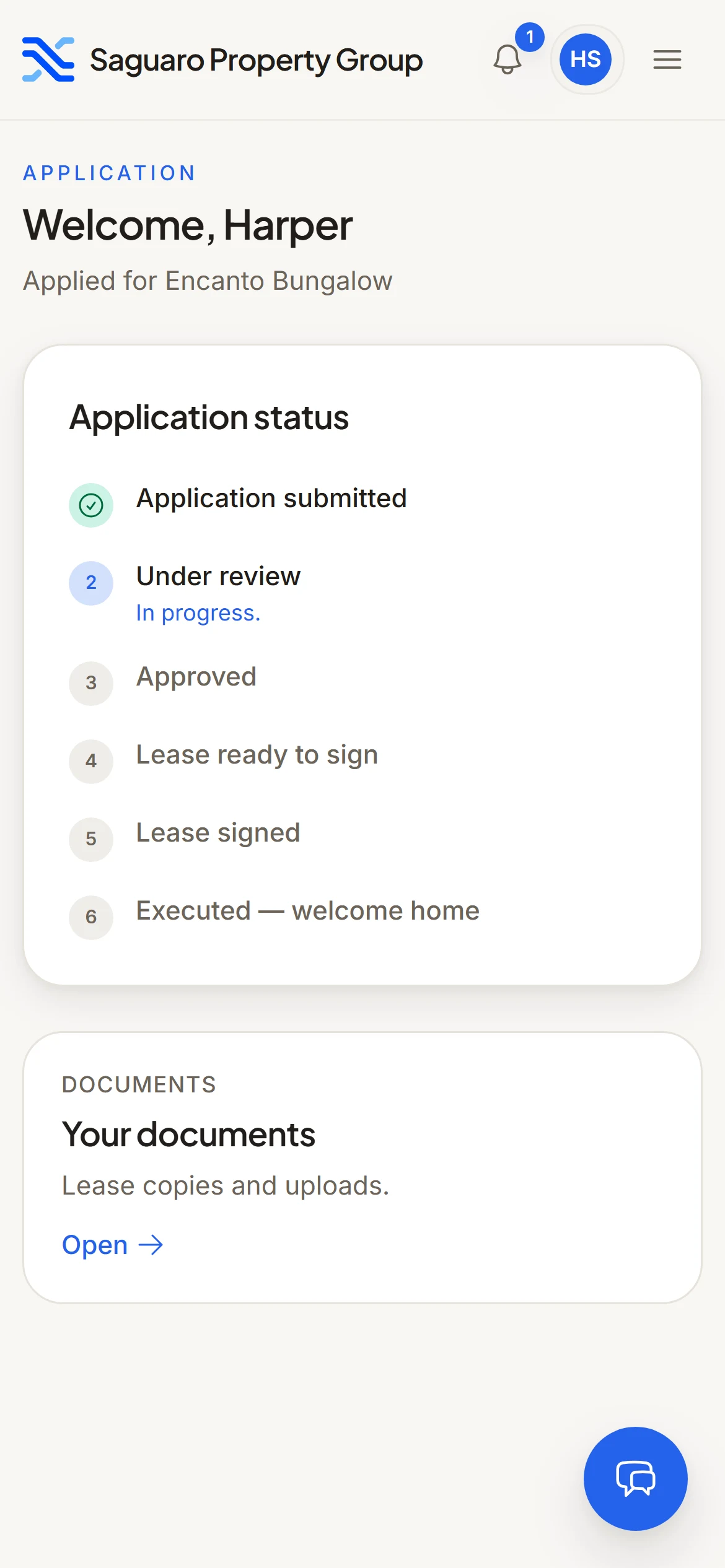
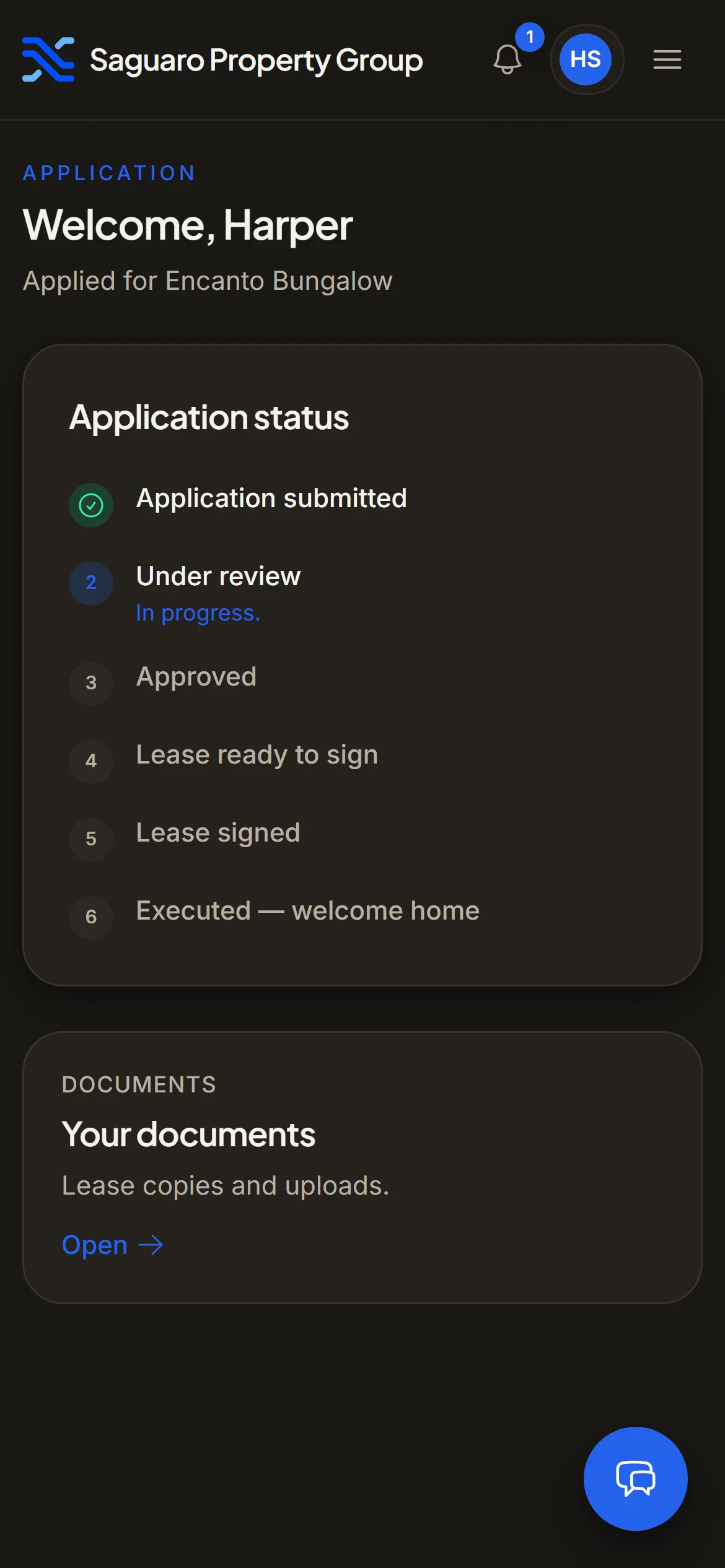
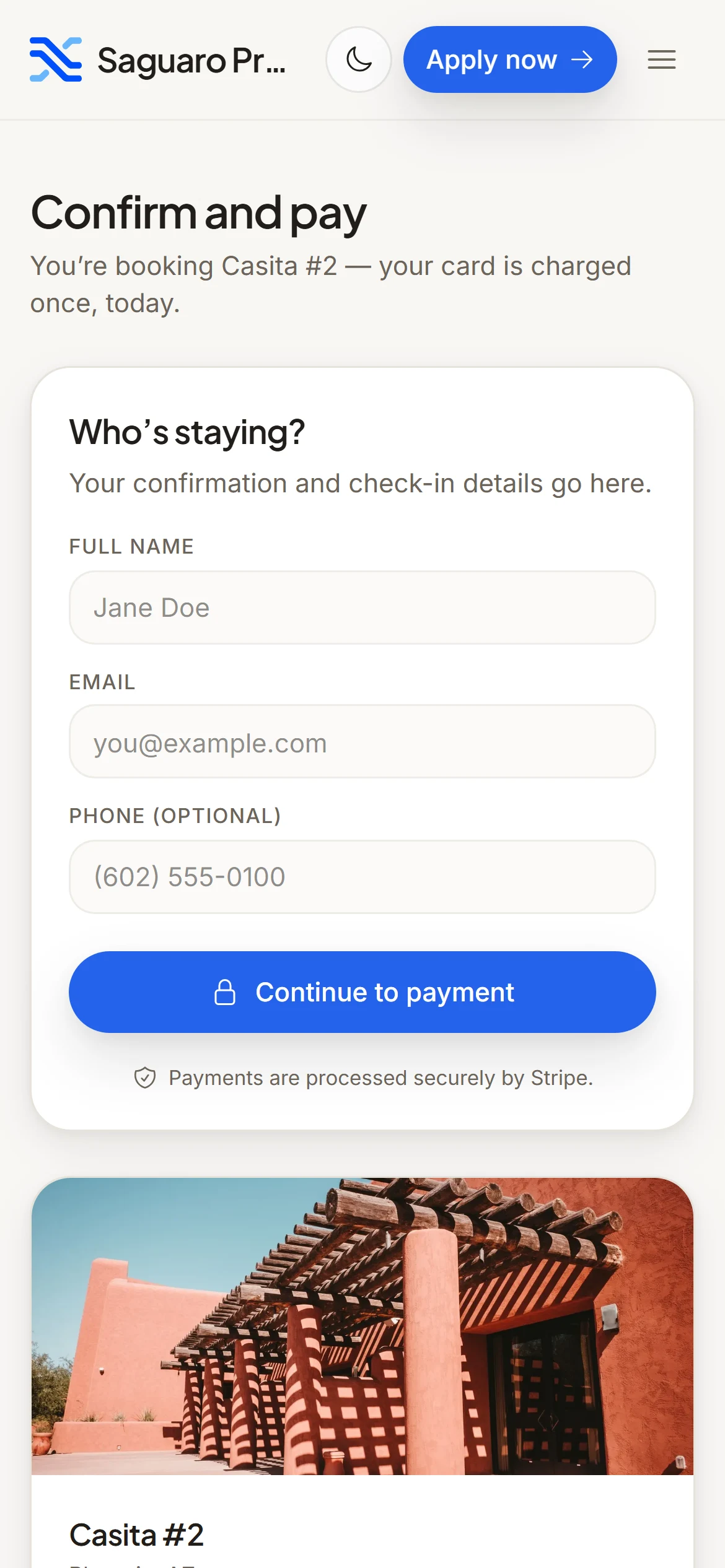
Our own site brings in about a quarter of our stays, and it’s the channel that keeps growing — five to seven inquiries a week, and not one of them costs a commission.
Some markets call these medium-term rentals; the site works the same. See mid-term rental software, or open the live demo set up for mid-term — no sign-up.
Direct booking FAQ
How do I get direct bookings instead of Airbnb?
Give people a reason and a way to find you. Build a site that shows the monthly price, what’s included and how to apply; publish a page for each home and for the tenants you serve (travel nurses, relocations, insurance stays); give past tenants, recruiters and adjusters your link; and answer inquiries the same day. Keep Airbnb for the guests who find you there — and follow its rules on off-platform contact.
Do I need a direct booking website for a mid-term rental?
You can start without one, but it pays off faster for mid-term than for nightly stays. Mid-term tenants want to see the monthly price, ask questions and apply, and every stay that comes direct carries no commission. About a quarter of our stays come through our own site.
What should a mid-term rental website include?
Real availability; the monthly rent and every required fee and deposit; what’s included (utilities, Wi-Fi, parking, furnishings); the minimum stay, notice and extension terms; real photos and the location; the pet policy; and an online inquiry form and application. Add who you are and how to reach you — it builds trust and helps renters avoid scams.
Can I send Airbnb guests to my own website?
No. Airbnb’s off-platform policy prohibits asking or encouraging guests to move current, future or repeat bookings off Airbnb — reservation extensions included — putting off-Airbnb links in listings or messages, and using guest contact details for marketing. For monthly stays, that means an Airbnb guest who extends extends on Airbnb. Grow your direct business with the people who find you directly.
How much does a direct booking site cost compared with Airbnb?
Airbnb takes a service fee from each stay — most hosts now pay 15.5%, which is $465 on a $3,000 month. A direct stay has no commission; you pay for the site or software and payment processing, which on Stripe’s standard US pricing is 2.9% + 30¢ for a card and 0.8% (capped at $5) for a bank debit.
Is it safe to take direct bookings?
As safe as your process. Have every adult apply, screen them the way the law allows in your state, sign a lease, and take the deposit and first month through a payment system you trust — not a stranger’s wire or an overpaid check. Our applications and screening guide covers the steps.
Sources
Read on each organization’s own pages on September 26, 2026. Fees and policies change — check the current versions.
- Airbnb Help Center: service fees and off-platform and fee transparency policy
- Furnished Finder: list your property and 2026 pricing and FAQs
- Stripe: pricing (standard US rates)
- Fair Housing Act, 42 U.S.C. 3604 and 3603 (exemptions)
- FTC: Rule on Unfair or Deceptive Fees, 16 CFR Part 464 and its FAQ
- Google: free booking links and vacation rentals on Google