
The short answer
What changes, and why hosts switch
A mid-term rental — also written midterm, or a medium-term rental in some markets — is a furnished home rented for one to twelve months, usually 30 nights or more, to travel nurses, project crews, relocating families and households displaced by an insurance claim. You keep the home, the furniture and often the Airbnb listing. Nearly everything around them changes:
| Topic | Nightly Airbnb | Mid-term rental |
|---|---|---|
| Typical stay | A few nights | One to twelve months, most two to six |
| Who stays | Vacationers and short work trips | People living and working nearby for a while |
| Agreement | Airbnb’s booking terms | A written lease or rental agreement |
| Pricing | Per night, changing daily | Per month, all-in, against furnished monthly rents |
| Where it’s booked | Airbnb, Vrbo, Booking.com | Airbnb monthly stays, your own site, Furnished Finder, Zillow, placements |
| Turnovers | Every stay | Every few months — each a deep clean |
| Rules | Short-term rental permits and lodging tax | Often a tenancy at 30+ nights; lodging tax often stops |
Hosts switch for steadier income, far fewer turnovers, lower cleaning and wear, and tenants who treat the home like a home — and sometimes because nightly rules or a crowded market force the question. Tyler Sorenson, Nexxus’s founder, made the move in 2019, from nightly cabin rentals to furnished mid-term homes:
We moved into mid-term for the tenant base and the lower turnover — and accepted a little less cash flow for it. For us it was the right trade.
Whether it’s the right trade for your home is a numbers question: run it as a nightly, monthly and yearly rental in the mid-term rental calculator, and see mid-term vs short-term rentals for the full comparison.
All the way, or a mix
Switching isn’t all or nothing. Three common shapes, from the smallest change to the biggest:
- Monthly stays on Airbnb only. Raise the minimum trip length to 28 nights — Airbnb’s line for a monthly stay — and take only long stays from the same listing. The least work, but every stay pays Airbnb’s fee and plays by its rules.
- Mid-term as the base, nightly in the gaps. Lease the home by the month and fill the week between tenants with short stays. More income from the gaps — and the most calendar risk, because a short stay can collide with a move-in.
- Mid-term across several channels. Keep Airbnb for monthly stays and add your own site, Furnished Finder and Zillow. In the founder’s rentals, about half of stays come through Airbnb, a quarter through their own website and a quarter through Zillow and the other listing sites.
1. Check the rules for stays of 30+ nights
- Your HOA and lease. Covenants can set minimum lease terms; if you rent the home yourself, longer stays still need the owner’s written consent — see rental arbitrage.
- Your city and county. Many short-term rental permits and limits apply only to stays under 30 nights, but some cities regulate longer stays too. Read your city’s definitions before you change a thing.
- Tenancy. Airbnb’s own guidance says that in California, Illinois and New York a residential tenancy may be created after 30 consecutive days. Other states draw the line differently — see the 30-day rule.
- Lodging tax. Many states stop charging lodging tax at 30 days; some wait until 90 days or six months — see transient occupancy tax.
- Insurance. Tell your insurer the home will be rented furnished for months at a time — see mid-term rental insurance.
2. Set Airbnb up for monthly stays
Airbnb calls any reservation of 28 nights or more a monthly stay, with its own pricing, payment and cancellation rules. The settings and rules that matter when you switch, as of October 2026:
| Topic | What to know | What to do |
|---|---|---|
| Trip length | If you don’t set a maximum, Airbnb applies 31 nights automatically | Raise the maximum; raise the minimum too if you want only long stays |
| Monthly discount | Discounts of 10% or more show in search results | Set one against furnished monthly rents — the founder uses about 15–20% off nightly |
| Cancellation | A separate long-term policy, Firm or Strict, applies to monthly stays | Choose one; it covers future reservations |
| Payouts | Guests pay monthly; the first payout comes the business day after check-in — or 28 days after for new hosts with fewer than two completed stays | Plan cash flow a month at a time |
| Fees | A single host fee — most hosts pay 15.5% — is mandatory for hosts on property management software | Price so what you keep matches your other channels |
| Date changes | A trip change on a monthly stay can go through without your approval — before check-in if it stays 28+ nights, after check-in if 30+ nights remain | Keep your calendar accurate everywhere |
| Contracts | A lease must be disclosed in the listing before booking | Put it in the description, and send it in the message thread |
| Extensions | Moving bookings off Airbnb — including reservation extensions — is not allowed | Extend Airbnb stays through Airbnb |
The full rules — long-term cancellation terms, deposits, damage claims and who you’re renting to — are in Airbnb monthly stays.
3. Put a lease behind long stays
A nightly booking runs on Airbnb’s terms; a stay of months needs a written lease that covers what a booking never does — the term, monthly rent and how partial months are prorated, the deposit, utilities, the furniture inventory, extensions, early move-outs and notice to vacate. The founder’s rentals use an attorney-drafted agreement for every stay, with a strict 30-day notice to vacate. For an Airbnb stay, disclose the lease in your listing before anyone books; for a direct stay, have every adult sign it. What it should say is in mid-term lease agreements.
4. List where mid-term tenants look
Travel nurses, project crews and insurance placements don’t only search Airbnb. Add the channels built for long stays: your own website, Furnished Finder, Zillow and the long-term sites, and the insurance and corporate placement companies that book for displaced families and traveling employees. What each costs is in where to list mid-term rentals; the details are in Furnished Finder for landlords, direct booking, renting to travel nurses and insurance (ALE) housing.
5. Price by the month
A monthly price isn’t your nightly rate times 30. Price against furnished homes rented by the month near you, all-in with utilities and Wi-Fi, use the federal per diem lodging rate as a ceiling for traveling professionals, and set each channel so what you keep is about the same. A one-month stay can fairly cost a little more per month than a six-month one — and in the founder’s rentals, a one-month stay often gets someone in the door, and then they extend. The steps are in how to price a mid-term rental; check a traveler’s budget with the travel nurse stipend calculator and partial months with the prorated rent calculator.
6. Furnish for living, not a weekend
An Airbnb is set up for a few nights. A mid-term tenant cooks, works, does laundry, gets mail and parks every day. What most Airbnbs add:
- A real desk and chair, and Wi-Fi fast enough to work from home
- A kitchen for cooking every day — pots, pans, knives, storage containers — not just coffee
- Dresser and closet space, with plenty of hangers, for months of clothes
- A washer and dryer, or clear directions to the nearest
- Blackout curtains for shift workers
- Mail and package delivery, and parking every day
- Utilities in your name, with what the rent covers in the listing and the lease
Room by room, with a move-in inventory to sign at check-in, it’s in the free furnishing and move-in checklist.
7. Set up deposits and screening for direct stays
On Airbnb, most hosts can’t charge a security deposit and you don’t get a screening report: you rely on Airbnb’s identity verification and past hosts’ reviews, with damage claims going through AirCover for Hosts. The founder’s rentals screen every applicant who applies directly and rely on Airbnb’s verification for Airbnb guests. Stays you take directly are yours to screen: have every adult apply, verify the reason for the stay, and run the same checks for everyone (see applications and screening). Take a refundable deposit within your state’s limit — the founder’s is at least $1,000 — and collect the first month, prorated, before keys change hands. Limits and deadlines are in security deposit.
8. Plan fewer, bigger turnovers
A nightly turnover is a quick reset several times a week. A mid-term turnover comes every few months, after someone has lived in the home — a deep clean, a check against the move-in record and a safety reset. Tell your cleaner the job is changing, and leave a buffer of at least a day between tenants. The whole job is in the free mid-term rental cleaning checklist.
9. Keep nightly and monthly stays on one calendar
The switch is when double bookings happen. A direct lease starts the day an Airbnb stay ends; a monthly guest’s trip change goes through without your approval; a short stay lands in the buffer before a move-in. Calendar links (iCal) only catch up periodically — Airbnb’s own calendar imports update every three hours — and a spreadsheet doesn’t update at all.
Roughly half our stays come through Airbnb, and a one-month stay often gets someone in the door — then they extend. The hard part was never Airbnb; it was keeping Airbnb, our own site and every lease on one calendar and one set of books.
That’s the job Nexxus does. Airbnb connects through Channex, an Airbnb Preferred+ Software Partner: reservations and changes come in, and availability, rates and minimum stays go out — so a lease you sign in Nexxus, or dates you block, close those nights on Airbnb. Your own booking site shows each home’s monthly rent, deposit and cleaning fee and takes inquiries and applications; Furnished Finder listings and Zillow syndication come from the same homes. Leases are e-signed, rent for the whole stay is scheduled with partial months prorated by the day, and your Airbnb reservation and payout history imports from Airbnb’s own exports. It works the same for one home you self-manage as for a portfolio you run for owners.
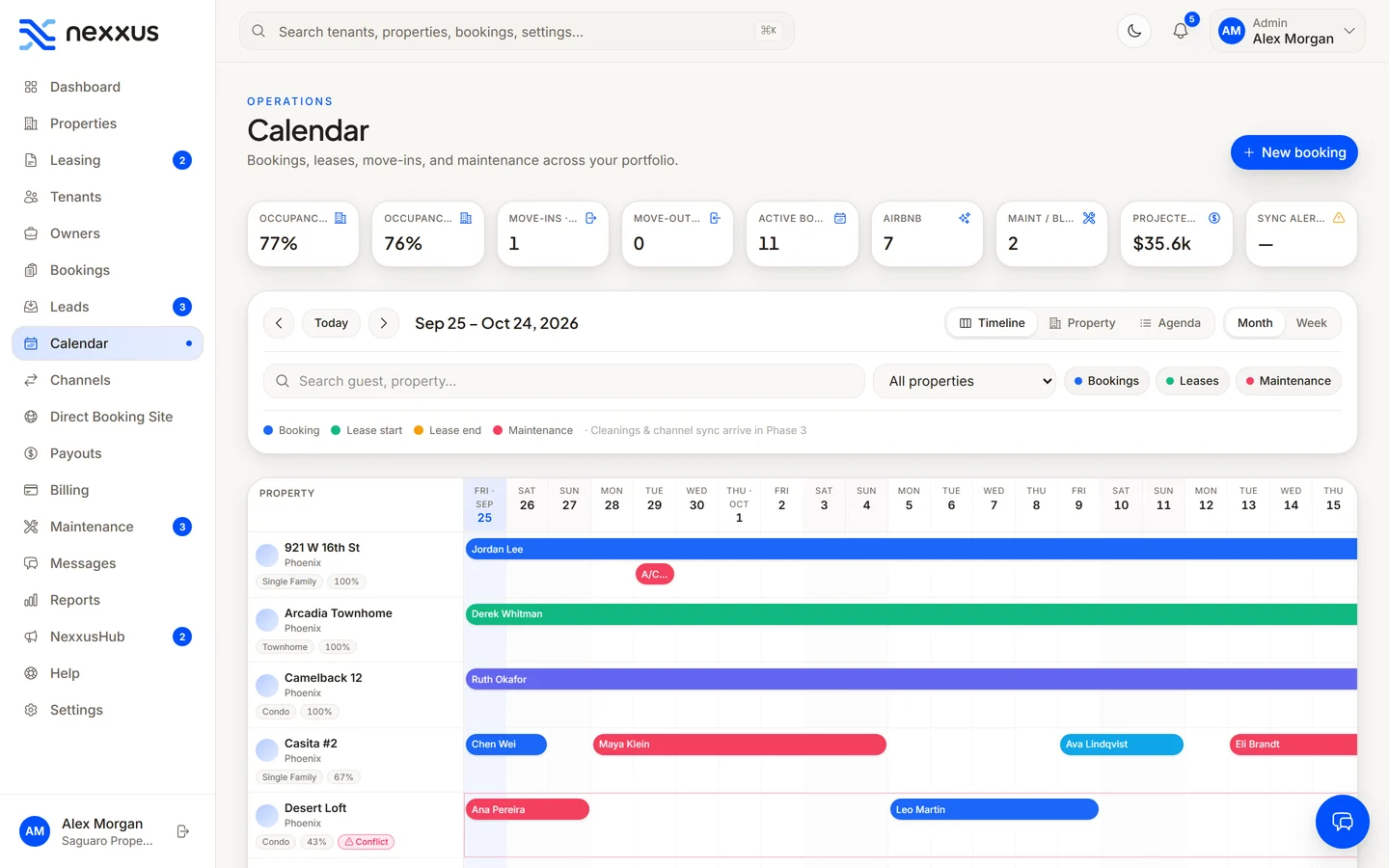
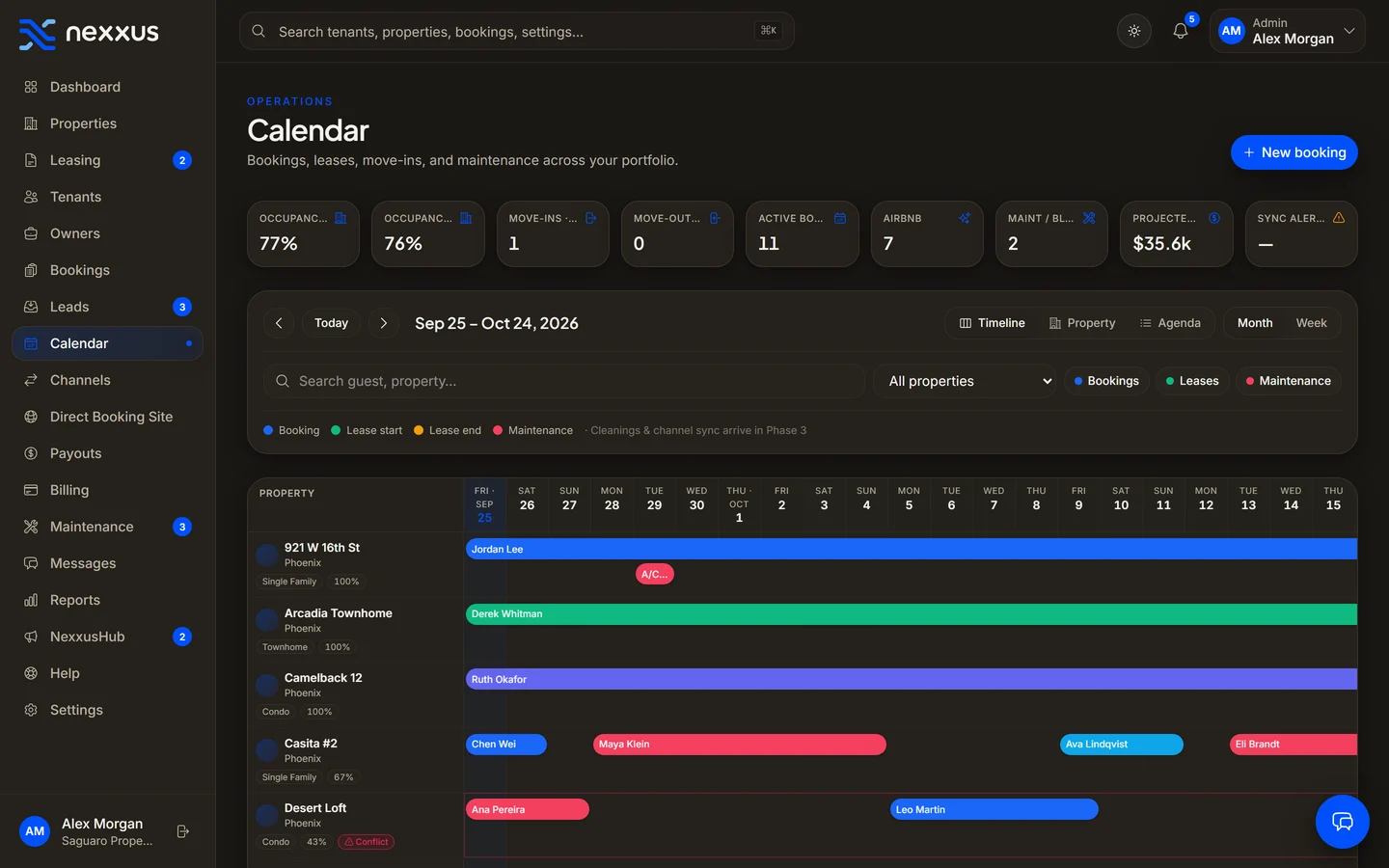
See mid-term rental software, or open the live demo set up for mid-term — no sign-up. Comparing tools that put Airbnb and monthly leases together? See Nexxus vs TIDY, and what Nexxus costs on Nexxus plans and pricing.
Switching from Airbnb to mid-term: FAQ
How do I switch my Airbnb to a mid-term rental?
Check your HOA, city and state rules for stays of 30 nights or more; set Airbnb up for monthly stays (maximum trip length, a monthly discount, a long-term cancellation policy); get a lease for long stays; list on the sites mid-term tenants use; price against furnished monthly rents; furnish the home for someone who lives and works there; set up deposits and screening for direct stays; and keep nightly and monthly stays on one calendar.
Should I keep my Airbnb listing when I switch to mid-term?
Usually, yes. Airbnb treats any stay of 28 nights or more as a monthly stay, so the same listing can take long stays. Nexxus founder Tyler Sorenson’s furnished mid-term rentals still get about half their stays through Airbnb, alongside their own website, Zillow and the other listing sites.
Is converting an Airbnb to a mid-term rental worth it?
It depends on the home and the market. Nightly rentals usually earn more in a strong season; mid-term trades some of that for far fewer turnovers, lower cleaning and wear, steadier monthly income and tenants who live like residents. Run the same home as a nightly, monthly and yearly rental in a calculator with your own numbers before you decide.
Can I move an Airbnb guest to a direct lease when they want to extend?
Not under Airbnb’s rules. Its off-platform policy bans asking or encouraging guests to move current, future or repeat bookings off Airbnb — and it names reservation extensions specifically. Extend through Airbnb with a trip change; take direct leases from guests who found you directly.
What happens if an Airbnb guest stays longer than 30 days?
In some states the guest can become a tenant. Airbnb’s own guidance says that in California, Illinois and New York a residential tenancy may be created after 30 consecutive days, which can mean a court process to remove a guest who won’t leave. Other states draw the line differently — check yours with a landlord-tenant attorney.
Why isn’t my mid-term listing getting inquiries?
Check the price against furnished monthly rents nearby (not your nightly rate times 30), say in the title and description that it’s for stays of a month or more with a workspace and utilities included, answer inquiries the same day, and list it where mid-term tenants search — not only on Airbnb.
Do I need different insurance when I switch to mid-term?
Tell your insurer. A homeowner’s policy may exclude or limit coverage once the home is rented as a business, and a policy written for nightly guests may not fit a tenant who stays for months. Ask how the policy treats furnished stays of 30 nights or more, your furnishings, liability and the gaps between tenants.
Sources
Read on Airbnb’s Help Center on October 6, 2026. Airbnb changes its fees and policies — check the current articles.
- Airbnb Help Center: host monthly stays, booking settings and trip length, weekly and monthly discounts, cancellation policies, payouts for monthly stays, service fees
- Airbnb Help Center: things to consider before hosting monthly stays, guest contracts, off-platform and fee transparency policy, changing the dates of a reservation, syncing calendars
- Airbnb: software partners (Channex, Preferred+)